
trauma therapy in north vancouver & online across bc
Trauma & PTSD in North Vancouver

Trauma Changes the way the Body Learns to Survive.
Sometimes trauma lives in obvious memories. Other times, it shows up quietly, in the body, the nervous system, relationships, emotions, and the way you move through the world.
You may find yourself constantly on alert, emotionally overwhelmed, shut down, disconnected, people-pleasing, avoiding conflict, struggling to trust, or feeling like you can never fully relax. Even when life looks “fine” on the outside, your body may still be carrying the weight of what happened.
At Soma Clinical Counselling, we offer trauma-informed, somatic, and attachment-based therapy for individuals navigating trauma, PTSD, and complex trauma (C-PTSD). Our work is grounded in the understanding that healing is not about “getting over it” — it is about helping your nervous system feel safer, more connected, and less stuck in survival mode.
Trauma can impact how you:
→
→
→
→
Feel in your body and nervous system
Experience safety and trust in relationships
Regulate emotions or manage overwhelm
Leave your nervous system stuck in patterns of survival

You may be carrying:
Childhood trauma or attachment wounds
Complex trauma (C-PTSD)
Emotional neglect
Relational trauma
Family conflict or dysfunction
Sexual trauma or abuse
Medical trauma
Trauma from toxic or unsafe relationships
Cultural, generational, or identity-based trauma
Our Approach to Trauma Therapy
At Soma, we believe trauma healing happens through safety, connection, and nervous system attunement, not through forcing or reliving painful experiences before you are ready.
Our approach is collaborative, compassionate, and paced with care. We work to help you build emotional safety and nervous system regulation while gently exploring the patterns, emotions, and protective responses that may have developed through trauma.

Fight, flight, freeze and fawn: Trauma responses
Free Fight, Flight, Freeze & Fawn Trauma Response Worksheet
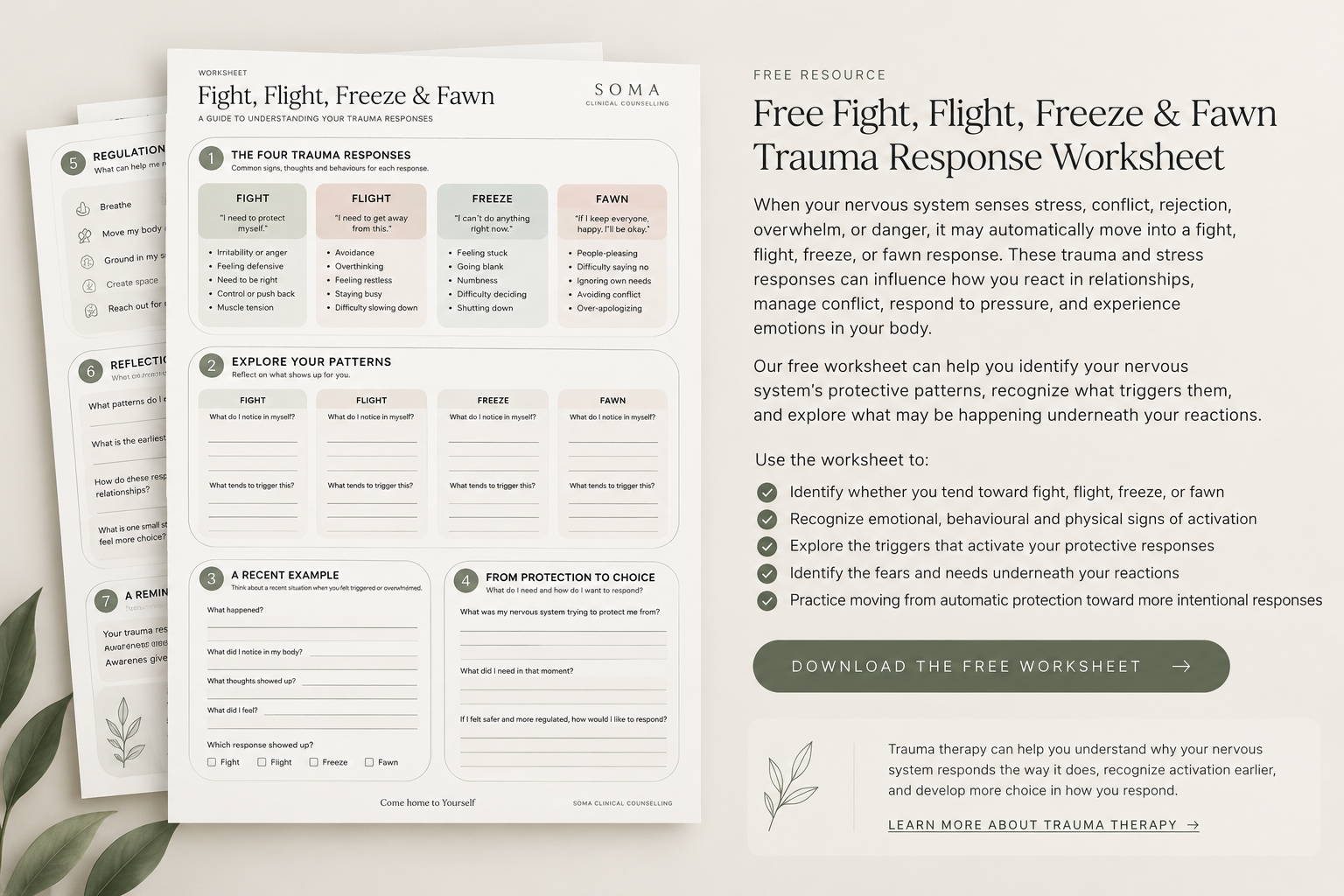
When your nervous system senses stress, conflict, rejection, overwhelm, or danger, it may automatically move into a fight, flight, freeze, or fawn response. These trauma and stress responses can influence how you react in relationships, manage conflict, respond to pressure, and experience emotions in your body.
Our free Fight, Flight, Freeze & Fawn Trauma Response Worksheet can help you identify your nervous system’s protective patterns, recognize what triggers them, and explore what may be happening underneath your reactions.
Use the worksheet to:
Identify whether you tend toward fight, flight, freeze, or fawn
Recognize emotional, behavioural, and physical signs of nervous system activation
Explore the triggers that activate your protective responses
Identify the fears and needs underneath your reactions
Practice moving from automatic protection toward more intentional responses
Frequently Asked Questions
-
Trauma therapy is a specialized form of counselling that helps you process painful or overwhelming experiences that continue to impact your thoughts, emotions, relationships, and nervous system.
trauma does not only come from major life events, it can also develop from ongoing experiences such as emotional neglect, difficult relationships, childhood experiences, chronic stress, or feeling unsafe over time.
At Soma Clinical Counselling, we use trauma-informed approaches that help you understand your responses, reconnect with yourself, and build a greater sense of safety and regulation.
-
You may benefit from trauma therapy if you notice patterns such as:
Feeling constantly on edge, anxious, or overwhelmed
Difficulty trusting others or feeling safe in relationships
Strong emotional reactions that feel bigger than the situation
Feeling numb, disconnected, or shut down
People-pleasing, perfectionism, or difficulty setting boundaries
Avoiding certain memories, emotions, or situations
Repeating relationship patterns that feel difficult to change
Feeling stuck despite understanding your experiences intellectually
Trauma therapy can help you understand why these patterns exist and support you in creating new ways of responding.
-
No. Trauma therapy does not require you to share every detail of what happened before you are ready.
At Soma Clinical Counselling, we prioritize emotional safety and work collaboratively at your pace. Many trauma approaches focus on helping your nervous system process experiences without requiring you to relive painful memories.
Healing is not about forcing yourself to revisit the past, it is about helping your brain and body recognize that you are safe in the present.
-
Yes. Anxiety is often connected to the nervous system’s attempt to protect you from perceived danger. Trauma therapy can help you understand the roots of anxiety, identify triggers, develop regulation skills, and process experiences that may be keeping your nervous system activated.
Rather than only managing symptoms, trauma therapy helps explore what your anxiety may be communicating.
-
EMDR is a well-researched trauma therapy approach that can help people process distressing memories and reduce the emotional intensity connected to them.
Many people seek EMDR for experiences such as trauma, anxiety, relationship wounds, grief, and overwhelming life events. Your therapist will first help you develop coping strategies and emotional regulation skills before beginning trauma processing.
-
Finding the right therapist is an important part of the healing process.
At Soma Clinical Counselling, we encourage you to consider what feels like the best fit, including your goals, the areas you want support with, and the therapist’s approach and experience.
You can explore each therapist’s profile to learn more about their specialties, therapeutic approaches, and the clients they support. If you are unsure who would be the best fit, our team can help guide you toward a therapist who aligns with your needs.
-
Your first session is an opportunity to get to know your therapist, share what brings you to counselling, and discuss what you hope to work on.
Your therapist will help you understand the therapy process, answer questions, and begin creating a plan that feels supportive and manageable.
You do not have to carry this alone.
Healing from trauma is not linear, and it does not happen overnight. But with support, it is possible to feel more grounded, connected, empowered, and present in your life again.

Ready to embrace change?
Together, we can start your journey towards healing