
Should I Use ChatGPT as a Therapist? A Human Therapist Perspective
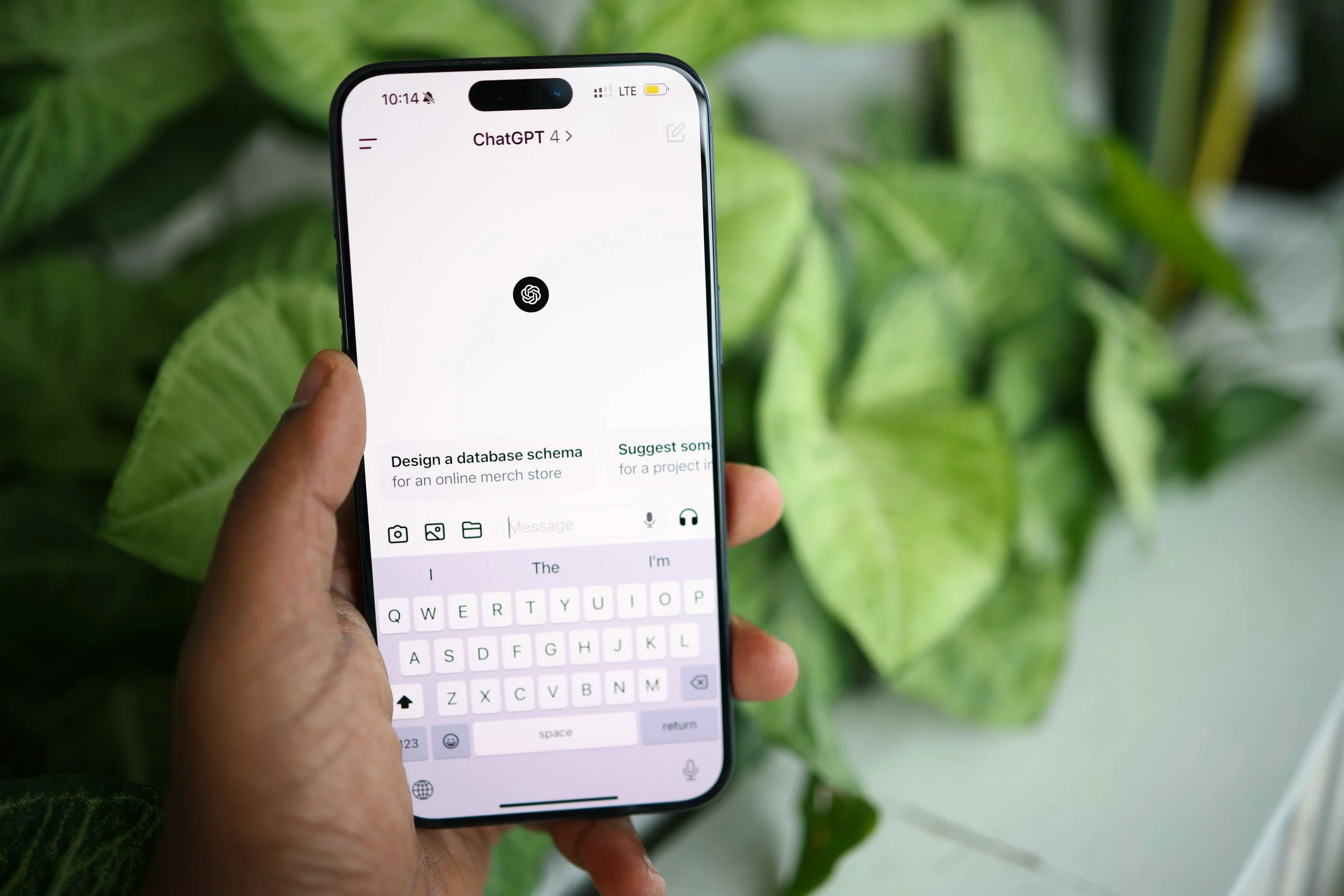
“Okay, so I asked ChatGPT about this…”
I feel like some version of this sentence has been coming up more and more in our therapy rooms at Soma Clinical Counselling.
Clients are using ChatGPT as a therapy tool between counselling sessions. They’re asking it questions about attachment, anxiety and relationships. They’re using it when they feel emotionally activated. And increasingly, we’re seeing clients use ChatGPT for DBT skills, including helping them separate emotional reactions from the facts of a situation.
So, is using ChatGPT as a therapist actually helpful? And where does an AI therapist fall short?
There are some genuinely useful things about that. But is using ChatGPT actually the same as going to therapy?
Not quite. And heres why.
At Soma Clinical Counselling, we’re not necessarily interested in telling people that AI has no place in mental health. Instead, we think it’s important to understand what AI can be useful for, where its limitations are, and when working with a trained therapist offers something fundamentally different.
Can ChatGPT Be Used as a Therapist?
ChatGPT and other AI tools can simulate a therapeutic-style conversation. You can describe what happened, ask questions about your emotions, explore attachment patterns, request grounding exercises, learn about anxiety or trauma, or ask for reflection questions.
That can sometimes feel surprisingly therapeutic. There is an important distinction, though: Feeling therapeutic is not the same as receiving therapy.
ChatGPT is an artificial intelligence system. It is not a Registered Clinical Counsellor, psychologist, social worker, physician, or other regulated mental health professional. It doesn’t know you in the way a therapist gradually comes to know you through an ongoing therapeutic relationship. It also cannot replace professional assessment, diagnosis when appropriate, clinical judgment, crisis intervention, or individualized treatment.
Still, that doesn’t mean AI can't have a useful role.
The Pros of Using ChatGPT for Mental Health
1. It’s Available When You Want to Process Something
Emotions rarely appear conveniently during your therapy appointment.
Maybe you have an argument with your partner at 11:30 p.m. Or you notice yourself spiralling after someone doesn’t respond to a text. Maybe you're sitting at work wondering why a seemingly small interaction affected you so intensely.
AI gives people somewhere to begin putting language around what is happening in the moment.
Sometimes simply slowing down enough to write: “This happened, this is what I thought, and this is what I felt.” can create space between the emotional reaction and what you do next. And when using AI in these moments, its a great addition to bring into your next therapy session to process with your therapist.
2. It Can Help You Find Language for Your Experience
One of the hardest parts of therapy can be figuring out how to explain what is happening internally.
You might know: “Something feels wrong.”
But not necessarily know whether you're experiencing anxiety, shame, anger, grief, attachment activation, overwhelm, or something else entirely. AI can sometimes help generate possibilities or questions to consider.
For example, instead of: “I'm freaking out because my partner hasn't texted me.” you may begin to recognize: “When communication suddenly changes, I notice fear coming up. My mind immediately interprets the distance as rejection, and I feel an urge to restore connection quickly.”
That kind of language can actually be helpful to bring into counselling.
3. It Can Provide Psychoeducation
AI can be useful for learning basic concepts related to mental health.
You might use it to learn more about:
attachment styles
the fight, flight, freeze and fawn responses
the nervous system
anxiety
boundaries
emotional regulation
relationship patterns
grounding strategies
journaling prompts
communication skills
For some people, learning the language behind their experience is an important first step toward understanding themselves.
4. It Can Help You Prepare for Therapy
Some people struggle to know what to talk about when they enter a counselling session. AI can potentially help you organize your thoughts beforehand.
For example, you might ask: “What questions could I reflect on before talking to my therapist about this?”
You can then bring those reflections into your session. In this way, AI may work better as a tool alongside therapy rather than a replacement for therapy.
The Cons of Using ChatGPT as a Therapist
There are also significant limitations worth understanding.
1. AI Doesn't Actually Know You
A therapist isn't only listening to the words you're saying.
They may also notice:
Your voice getting quieter.
The moment you laugh while describing something painful.
The way you suddenly change the subject.
The tension that appears in your body when you talk about your childhood.
The contradiction between saying “it doesn't bother me anymore” while becoming visibly emotional.
Those moments can matter.
Therapy often involves gently slowing down around the experiences we have learned to move away from. AI primarily responds to the information and context available to it. It cannot fully perceive or understand your internal experience.
2. AI Can Be Wrong
This is particularly important.
AI can provide information that sounds confident and psychologically sophisticated while still being inaccurate, overly generalized, or inappropriate for your particular situation.
Mental health is rarely as simple as:
Behaviour → explanation → solution.
The same behaviour can develop for completely different reasons in different people.
Someone withdrawing during conflict could be overwhelmed, afraid, angry, protecting themselves, emotionally disengaged, experiencing trauma activation, or simply needing time to think.
Context matters.
3. AI Can Accidentally Reinforce the Story You Already Believe
Imagine someone tells an AI system: “My partner hasn't answered me for five hours. They're avoidant and clearly don't care about me.”
If the conversation simply reinforces that interpretation, the person may leave feeling even more certain about something that hasn't actually been established. Therapy sometimes involves validation. But good therapy also involves curiosity.
A therapist may gently ask: “What happened inside of you when you noticed they hadn't responded?”
And then: “What did your mind tell you their silence meant?”
And eventually:“Does this feeling remind you of anything?”
The goal isn't always to confirm the first interpretation.
Sometimes therapy helps us understand why that interpretation became so powerful in the first place.
AI Can Validate You, But Therapy Sometimes Needs to Challenge You
One potential limitation of using AI for emotional support is that reassurance can feel really good. And sometimes reassurance is exactly what we need.
But sometimes growth requires something different. A therapist may compassionately help you notice: “I understand why you're doing this. And I also think this strategy might be contributing to the cycle you're stuck in.”
For example, if someone has anxious attachment tendencies, repeatedly seeking reassurance may temporarily decrease anxiety. But if reassurance becomes the only way they can feel safe, the underlying fear may never actually get addressed. Similarly, someone who tends to withdraw may experience enormous relief when they avoid a difficult conversation.But that relief doesn't necessarily mean avoidance is helping the relationship. Therapy often works in that complicated space between:
“Your response makes sense.” and “Let's look at whether it's still working for you.”
The Biggest Difference: The Therapeutic Relationship
This may be the most important distinction. Therapy isn't simply receiving psychologically informed advice.
The relationship itself is part of the work.
For someone with attachment wounds, for example, therapy may involve experiencing what happens when another person remains present while they feel vulnerable. You might expect judgment. But your therapist remains curious. You might expect someone to leave when you're emotional. But they stay. You might struggle to communicate a need. And instead of being rejected, you work through it together. You might become frustrated with your therapist. And rather than ending the relationship, you repair it. Those experiences can gradually challenge deeply held beliefs about relationships, vulnerability, safety, and connection. You cannot fully replicate that through information alone.
What About Trauma Therapy?
This distinction becomes particularly important when working with trauma.
Trauma therapy isn't simply telling the story of what happened. Approaches such as EMDR, Brainspotting, somatic therapy, attachment-based therapy, and trauma-informed counselling often involve carefully working with emotions, memories, bodily sensations, nervous-system activation, and protective responses.
A trained trauma therapist is continuously assessing things like:
Are we moving too quickly?
Is this person becoming overwhelmed?
Are they disconnecting from their body?
Do we need to slow down?
Do we need to build more stabilization before processing this memory?
Sometimes opening something emotionally intense without enough support can leave a person feeling more activated rather than less.
That is one reason deeper trauma processing is generally better suited to a therapeutic environment with appropriate professional support.
A Helpful Way to Think About AI and Therapy
Chat GPT can be an amazing tool in between sessions and can be a great tool in conjunction with therapy.
Instead of asking: “Can ChatGPT replace my therapist?”
A more useful question may be: “How can I use AI in a way that supports my mental health without asking it to do something it isn't designed to do?”
AI may be useful for:
Learning.
Understanding concepts such as attachment, anxiety, trauma responses, or emotional regulation.
Reflecting.
Generating journal prompts or questions to think about.
Organizing.
Putting thoughts into words before a counselling session.
Tracking.
Noticing patterns in triggers, emotions, thoughts, and behaviours.
Practicing.
Brainstorming ways to communicate a boundary or need before having a conversation.
Then therapy can provide something different:
Relationship.
Clinical judgment.
Individualized treatment.
Emotional attunement.
Accountability.
Deeper processing.
Repair.
And sometimes, the experience of being understood by another human being.
Try Asking AI Better Questions
If you do use ChatGPT or another AI tool for self-reflection, consider moving away from:
“Tell me who's right.” “Is my partner toxic?” “Does this mean they're avoidant?” “Tell me what I should do.”
Instead, try questions such as:
“What are three different ways I could interpret this situation?”
“What emotion might be underneath my anger?”
“What information am I assuming that I don't actually know?”
“What might my nervous system be responding to here?”
“What questions could I bring to my therapist about this?”
“Help me separate what I know from what I'm afraid might be true.”
These kinds of questions encourage reflection rather than certainty.
So, Should You Use ChatGPT as a Therapist?
AI can be an incredibly useful tool for reflection, psychoeducation, journaling, and helping people find language for their experiences. It can be a great tool in between sessions. But it isn't a replacement for therapy.
Perhaps the healthiest way to think about AI and mental health isn't AI versus therapy. It's understanding what each can realistically offer.
You can use technology to learn more about yourself.
You can use journaling to notice your patterns.
You can read about attachment.
You can practice grounding exercises.
You can bring those observations into therapy.
But when you're working through trauma, attachment wounds, anxiety, depression, relationship patterns, grief, eating concerns, or experiences that feel difficult to navigate alone, there can be something uniquely powerful about doing that work in relationship with another person.
Looking for Counselling in North Vancouver?
At Soma Clinical Counselling, our therapists work with individuals and couples navigating trauma, attachment and relationship patterns, anxiety, depression, ADHD, grief, eating concerns, life transitions, and other emotional challenges.
Our approach is trauma-informed, attachment-focused, relational, and collaborative.
Depending on your needs and therapist, approaches may include EMDR, Brainspotting, Emotionally Focused Therapy (EFT/EFIT), Internal Family Systems (IFS), somatic approaches, CBT, DBT-informed strategies, Narrative Therapy, mindfulness, and other evidence-informed approaches.
We offer in-person counselling in North Vancouver and online counselling throughout British Columbia.
If you've been using ChatGPT to understand what you're going through and you're realizing: “I think I want to explore this more deeply with an actual person.”
That might be a good place to begin.
A consultation can help you explore what you're looking for in therapy and which therapist at Soma may be the right fit.
Written by Hayley Booker, RCC, CSTFP
Hayley is a Registered Clinical Counsellor and Certified Somatic Therapy Foundations Practitioner and the Clinic Director of Soma Clinical Counselling in North Vancouver, BC. Her work focuses on trauma, attachment, relationships, emotional regulation and somatic approaches to therapy.